
How Christmas markets became part of winter
Follow the evidence from German market privileges and Austrian seasonal stalls to the varied UK markets we visit today.
A tradition with several beginnings
A Christmas market can feel timeless: a square, stalls, something warm to eat and people meeting as the light fades. Its history is less tidy than a single founding date suggests. A privilege to hold a winter fair is not automatically evidence of the decorated seasonal market we recognise today. The date of the earliest surviving document is also different from proof of an uninterrupted annual event. Read the milestones below as evidence for particular places, rather than a competition to award one universal birthplace.
The German and Austrian stories are useful starting points because their surviving records show how practical trade, seasonal food and changing Christmas customs came together. They also show why familiar claims need checking. Vienna’s municipal history explicitly challenges a much-repeated medieval origin story, and Nuremberg revised the interpretation of a key object in 2025. Neither correction makes a present-day visit less enjoyable; it gives the places a more interesting and accurate story.
Dresden: a market privilege in 1434
The Dresden City Archive describes the privilege granted on 19 October 1434 by Elector Friedrich II and his brother Duke Sigismund. It allowed free meat markets, including one on Christmas Eve. That specific permission sits at the beginning of the tradition associated with the Striezelmarkt. It was concerned with supplying people with food, not creating an illuminated tourist attraction.
The organiser’s historical account describes the first market as a one-day event on the Altmarkt. Other goods joined the meat trade as the market developed. Its name is linked to Striezel, the baked speciality associated with the later Dresdner Christstollen. Looking at food and craft together makes more sense here than imagining today’s full programme already existed in the fifteenth century. A modern stall selling stollen is part of a living local identity; its menu and opening hours still belong to the current season.
Vienna: why the 1296 claim needs care
The City of Vienna says that its medieval city privileges do not establish a Christmas market in 1296. They allowed certain fairs, but these did not include a market associated with celebrating Christmas. The city also notes that accounts from medieval Vienna do not show Christmas-market revenue or costs. It therefore rejects the simple claim that the present tradition began there more than seven centuries ago.
The municipal account instead discusses seventeenth-century evidence, including chronicles mentioning huts at Graben and Brandstätte in 1626. Christmas trading changed location over time; the familiar Rathausplatz setting came much later, in 1975. The useful distinction is between the age of Vienna as a trading city, early evidence of seasonal stalls and the age of a particular market site. Those are separate histories, even when a visitor can enjoy all three within one city walk.
Nuremberg: an old box and a corrected date
Nuremberg’s painted wooden box is a reminder that small objects can carry large historical claims. For many years its hard-to-read inscription was interpreted as evidence for a Christkindlesmarkt in 1628. Research announced by the city on 23 October 2025, involving the City Archive and Germanisches Nationalmuseum, revised that reading to 1678.
The people named in the inscription and their lifetimes were central to the correction. The city explained that the market could mark a 350th anniversary in 2028, rather than the previously expected 400th. Older leaflets and travel articles may still repeat 1628. When you see that date, check when the account was produced. The red-and-white market roofs remain a recognisable part of a contemporary visit, but the interpretation of the surviving evidence has moved on.
From supplying a town to planning a festive outing
These records should not be read as a claim that every stall, recipe or ceremony has survived unchanged. A market is made by people choosing what to sell, what to buy and how to gather. The familiar mix of gifts, food and decoration can contain old techniques, revived customs and newly designed products at the same time. “Traditional” on a sign is a starting point for a conversation with a maker, rather than proof of a particular age.
Look for the small details when you visit: the name of a local bake, the material used in an ornament, a maker demonstrating a technique or a square described in an archival picture. Ask what is made locally and what the trader can tell you about it. A handmade object need not be centuries old to be worth buying. Equally, a historic street does not mean that every product offered there was made in the region.
The UK chapter: different models, shared pleasures
Britain’s current Christmas-market scene includes German-style events, locally focused craft markets, cathedral fairs and seasonal village programmes. Those formats should not all be given the same origin story. Birmingham’s Frankfurt market provides one example of a German market tradition presented in a UK city, while Bath’s organiser dates its own event to 2001 and describes its beginning as a gathering of local businesses and artisans.
These examples show two different reasons to visit. One trip might centre on a recognisable German-style food-and-drink circuit; another might prioritise regional makers among familiar city streets. Other hubs in this guide cover brief weekend fayres, new cathedral events and modern city festivals. Their appeal does not depend on claiming a medieval foundation. Use the individual guide to understand the actual organiser and setting, then choose the visit that interests you.
A short evidence-led timeline
- 1434 — Dresden receives the market privilege associated with the Striezelmarkt tradition.
- 1626 — Vienna chronicles mention seasonal huts; the city distinguishes this evidence from medieval fair rights.
- 1678 — Revised date of the Nuremberg box inscription, announced by the city in 2025.
- 1975 — Vienna’s Christmas market moves to Rathausplatz.
- 2001 — Bath’s organiser dates the beginning of its Christmas market to this year.
- 2025 — Nuremberg announces new research correcting the familiar 1628 interpretation.
Take the history into your visit
Choose one historical thread instead of trying to turn a market break into a museum marathon. In Dresden that might be the relationship between food and the Altmarkt; in Vienna it might be the move between different city squares; in Nuremberg it could be the way an object changes what historians can say. Leave time for a museum or a readable source before returning to the stalls.
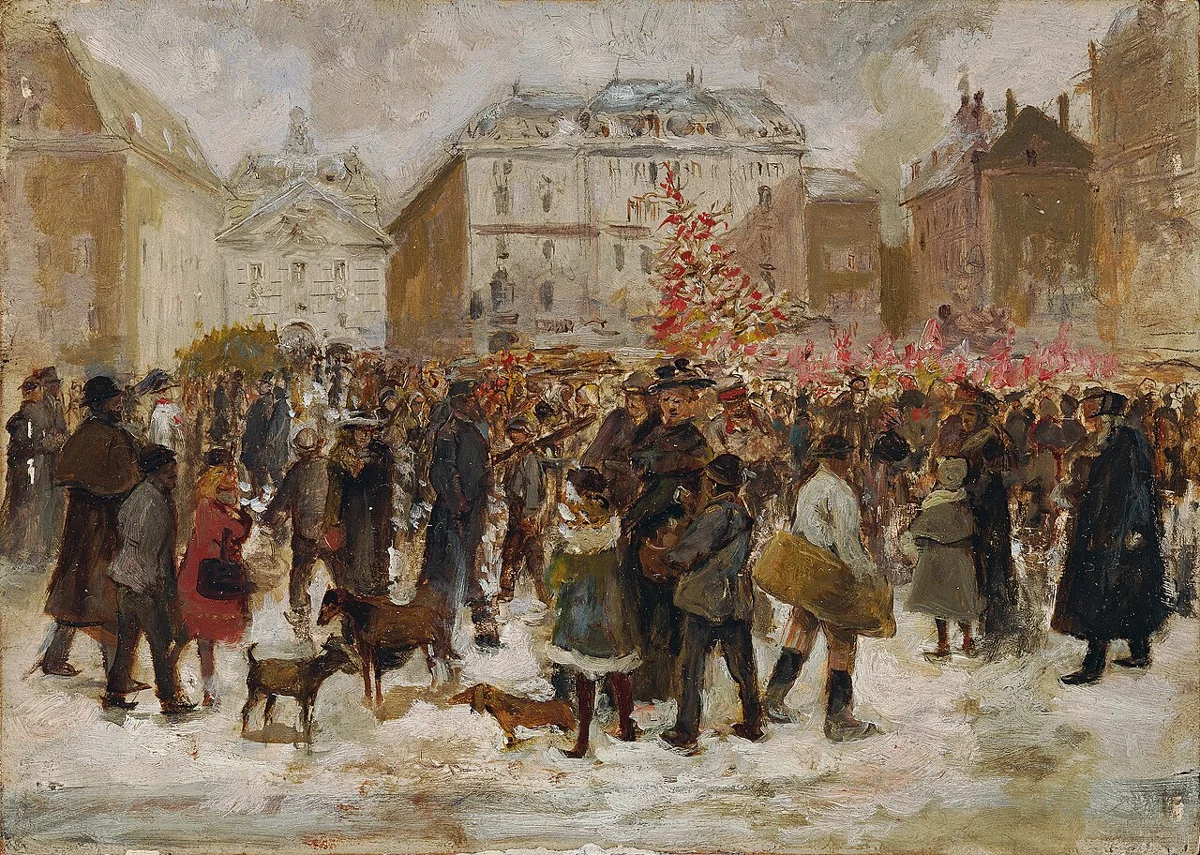
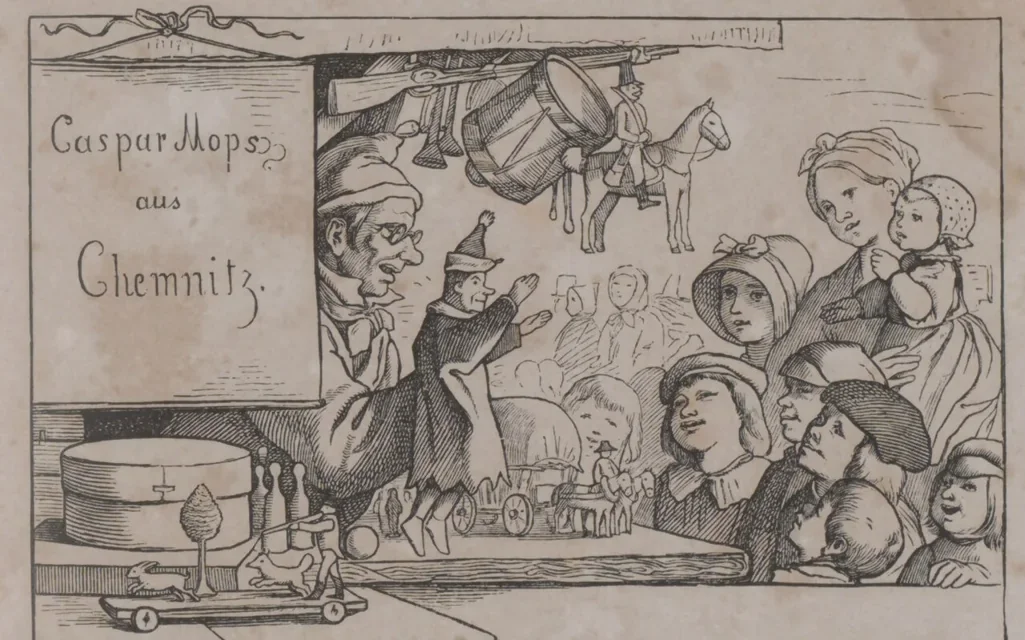
Historical pictures on this page show earlier settings and ways of trading. They are not images of the current season, and a building or route in an old picture may have changed. For present-day opening dates, admission and access, follow the live city guide rather than inferring arrangements from the history. Enjoy the continuity of meeting, browsing and sharing a winter treat while leaving room for the parts of the story that are still being researched.
Sources to explore
Questions before you go
Did Vienna have a Christmas market in 1296?
The City of Vienna says the medieval privileges did not include a Christmas fair. Its history distinguishes those rights from later evidence of seasonal huts.
Why do different sources give Nuremberg different dates?
The city announced revised research in 2025: the famous box inscription is now dated to 1678, rather than the previously repeated 1628.
Do these dates prove markets ran every year?
No. A market privilege, surviving object or earliest reference does not by itself prove an uninterrupted annual run. Read the linked historical account for its precise claim.
Where can I check this year’s market arrangements?
Use the current city guide and its official organiser links. Historical images and foundation dates do not establish today’s opening times, entrance or layout.